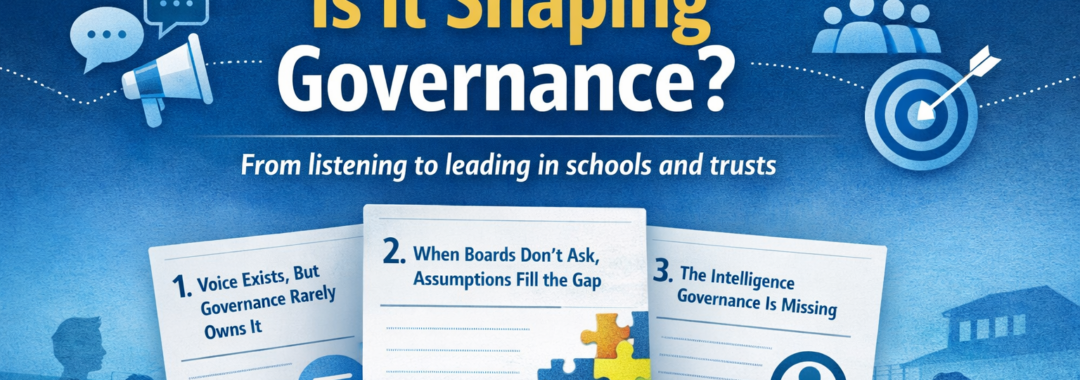
Voice Exists: But Is It Shaping Governance?
Pupil and parent voice is not new. In many schools and trusts, it is visible, active, and valued. But when it comes to governance, a different picture often emerges. Voice exists, but it is not always owned, shaped, or used in ways that strengthen strategic decision-making.
In this three-part series, we explore the gap between hearing and using voice, and what it means for assurance, confidence, and impact at board level.
Blog 2: When Boards Don’t Ask, Assumptions Fill the Gap
In the absence of direct voice, boards don’t operate in a vacuum. They fill the space with something else: assumptions.
In governance reviews, we often hear phrases like:
- “We’d hear if there was a problem.”
- “The data looks strong.”
- “There haven’t been many complaints.”
- “Feedback is generally positive.”
None of these are unreasonable statements. But none of them are the same as evidence of lived experience.
Silence is often mistaken for satisfaction; particularly when systems appear calm and reports are reassuring. Yet for pupils and parents, silence can mean many things: uncertainty, lack of trust, fear of consequences, or simply not knowing how or where to speak up.
Children, especially, are unlikely to raise concerns in ways that travel neatly to board papers.
When boards don’t ask directly, they rely on proxies: attendance figures, outcomes, incident logs, survey averages. These are important; but incomplete. They tell boards what is happening, not how it is experienced.
Over time, assumptions harden into confidence. Confidence hardens into reassurance. And reassurance can mask emerging risks around belonging, inclusion, safety, or trust; particularly for quieter groups or those whose voices are least likely to be amplified.
The issue isn’t that boards don’t care. It’s that without actively seeking voice, governance doesn’t realise what it’s missing.
Reflective question: When governance doesn’t ask, what assumptions is it relying on instead, and how reliable are they?
From listening to leading
This blog is part of a wider series exploring how governance can move beyond hearing voice, towards using it to shape better decisions.
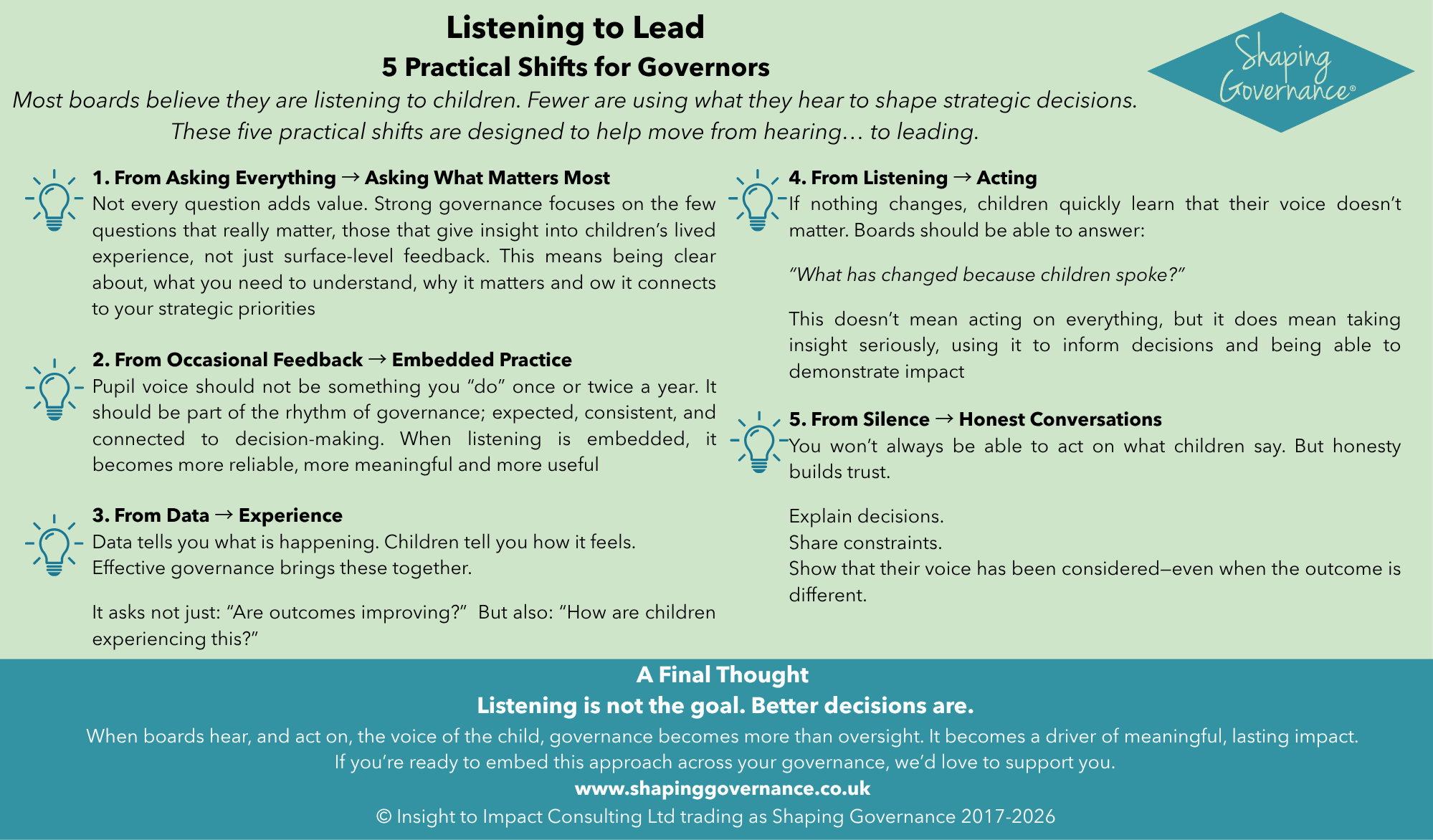
If this resonates, you can start by exploring our 5 Practical Shifts for Governors.
About the author
Su is CEO of Shaping Governance and has over 20 years’ experience supporting governing boards and trustees nationally. Her work is grounded in what she sees through governance reviews; helping boards strengthen assurance, culture, and child-centred decision-making through reflective, appreciative governance.