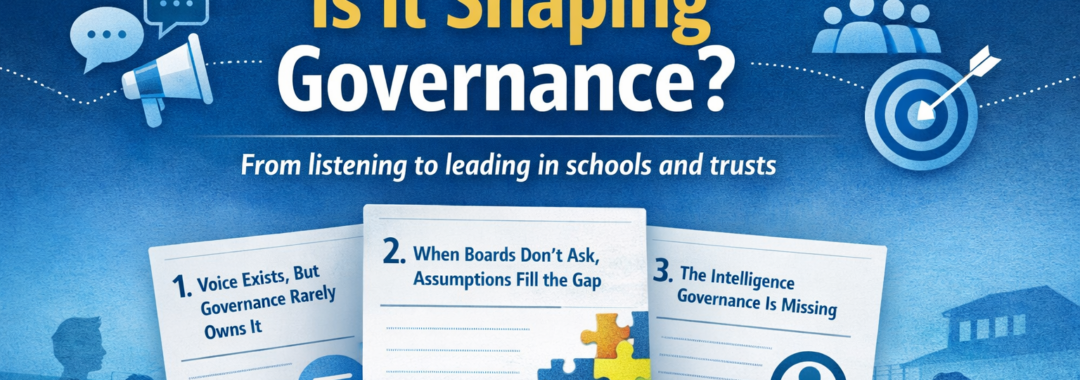
Voice Exists: But Is It Shaping Governance?
Pupil and parent voice is not new. In many schools and trusts, it is visible, active, and valued. But when it comes to governance, a different picture often emerges. Voice exists, but it is not always owned, shaped, or used in ways that strengthen strategic decision-making.
In this three-part series, we explore the gap between hearing and using voice, and what it means for assurance, confidence, and impact at board level.
Blog 1: Pupil Voice exists; but governance rarely owns it
In many schools and trusts, pupil and parent voice exists. There are surveys, councils, forums, Parliaments, suggestion boxes, and engagement events. On paper, it looks like listening is happening.
But in governance reviews, we repeatedly see something different: governance itself rarely owns voice.
Boards often assume that voice is being gathered elsewhere, by leaders, by schools, by teams; and that anything important will naturally make its way to the board. Voice becomes something governance receives, rather than something it deliberately shapes, seeks, or tests.
This creates a quiet but significant gap.
When governance doesn’t own voice, it doesn’t own the questions. Boards don’t decide what they need to understand about pupils’ experience, parents’ confidence, or how it actually feels to be part of the school or trust. Instead, they rely on what is chosen, summarised, or escalated for them.
That’s not negligence; it’s often unconscious. Many boards believe that asking directly would blur lines or drift into operational territory. But the result is that governance becomes one step removed from lived experience, relying on second-hand insight to provide assurance.
The irony is that boards work incredibly hard to assure themselves about quality, safety, inclusion, and culture; yet rarely test those judgements against the voices of the people most affected by them.
When governance doesn’t actively own voice, it weakens its own confidence. Decisions may still be sound, but they are made with less depth, less context, and less connection to reality.
Reflective question: If governance doesn’t shape the questions it needs answers to, how confident can it really be in the assurance it receives?
From listening to leading
This blog is part of a wider series exploring how governance can move beyond hearing voice, towards using it to shape better decisions.
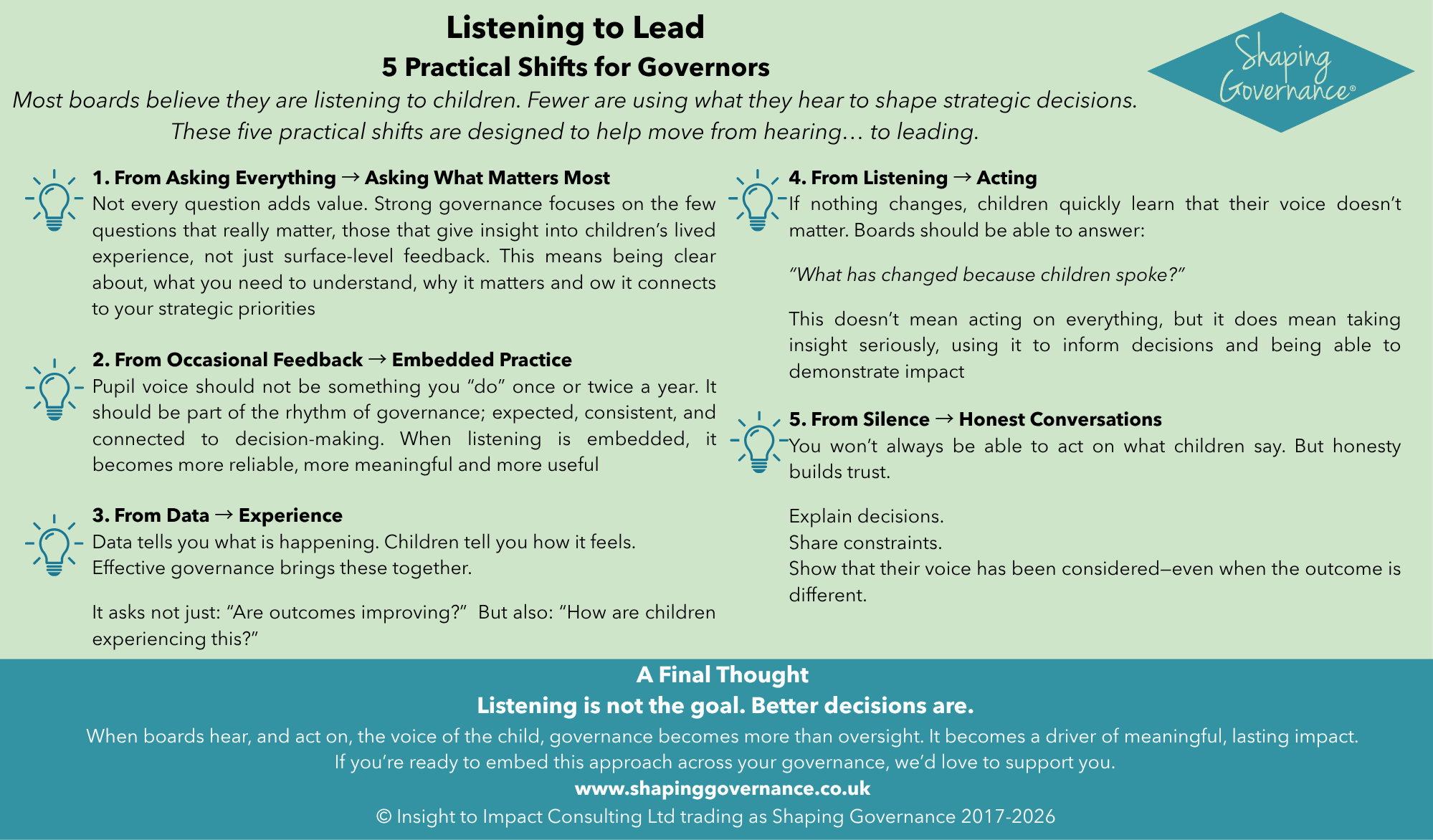
If this resonates, you can start by exploring our 5 Practical Shifts for Governors.
About the author
Su is CEO of Shaping Governance and has over 20 years’ experience supporting governing boards and trustees nationally. Her work is grounded in what she sees through governance reviews; helping boards strengthen assurance, culture, and child-centred decision-making through reflective, appreciative governance.