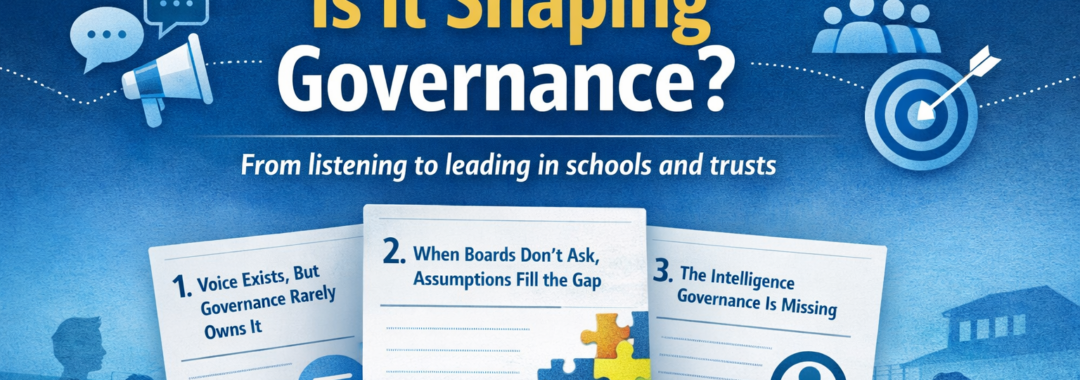
Voice Exists: But Is It Shaping Governance?
Pupil and parent voice is not new. In many schools and trusts, it is visible, active, and valued. But when it comes to governance, a different picture often emerges. Voice exists, but it is not always owned, shaped, or used in ways that strengthen strategic decision-making.
In this three-part series, we explore the gap between hearing and using voice, and what it means for assurance, confidence, and impact at board level.
Blog 3: Pupil and Parent Voice: The intelligence governance Is missing
In schools, pupil and parent voice is often framed as engagement, consultation, or communication. Something important; but not always seen as essential to governance.
In practice, what we consistently see in our work with schools and trusts is that voice is treated as a project rather than intelligence.
Pupil voice may sit with school councils or enrichment activity. Parent voice may surface through surveys or, more often, through complaints. Rarely is either positioned as a core source of insight that helps governing boards understand whether their decisions are working in reality.
This matters because boards are asked to make judgements about culture, inclusion, safeguarding, wellbeing, and belonging; all areas where lived experience is not a “nice to have”, but critical evidence.
When governance only hears from pupils and parents when something goes wrong, it loses the opportunity to understand what is working well, where trust is strong, and where small issues are quietly becoming bigger ones. Complaints become the loudest voice in the room, not because they are the most important, but because everything else has gone unheard.
Equally important is what happens after voice is sought. In many cases, pupils and parents are asked for their views but never hear what happened next. Even when governing boards cannot act on feedback, the absence of explanation erodes trust. Being asked and ignored often feels worse than not being asked at all.
Governance does not need to promise action on every issue raised. But it does have a responsibility to be honest, transparent, and clear about how voice informs decisions, and where it cannot.
When pupil and parent voice is treated as intelligence, not noise, not risk, not consultation theatre; boards make better decisions. Not because they give up authority, but because they gain understanding.
Reflective question: What would governance see differently if pupil and parent voice were treated as essential intelligence, not optional engagement?
A final reflection
In our experience, many governing and trust boards want greater confidence in their decisions; not more activity. This is why we developed Listening to Lead, a structured, facilitated governance offer that turns pupil voice into insight boards can act on, designed specifically to help governance hear directly from children in a structured, purposeful way that strengthens assurance while respecting roles and boundaries.
From listening to leading
This blog is part of a wider series exploring how governance can move beyond hearing voice, towards using it to shape better decisions.
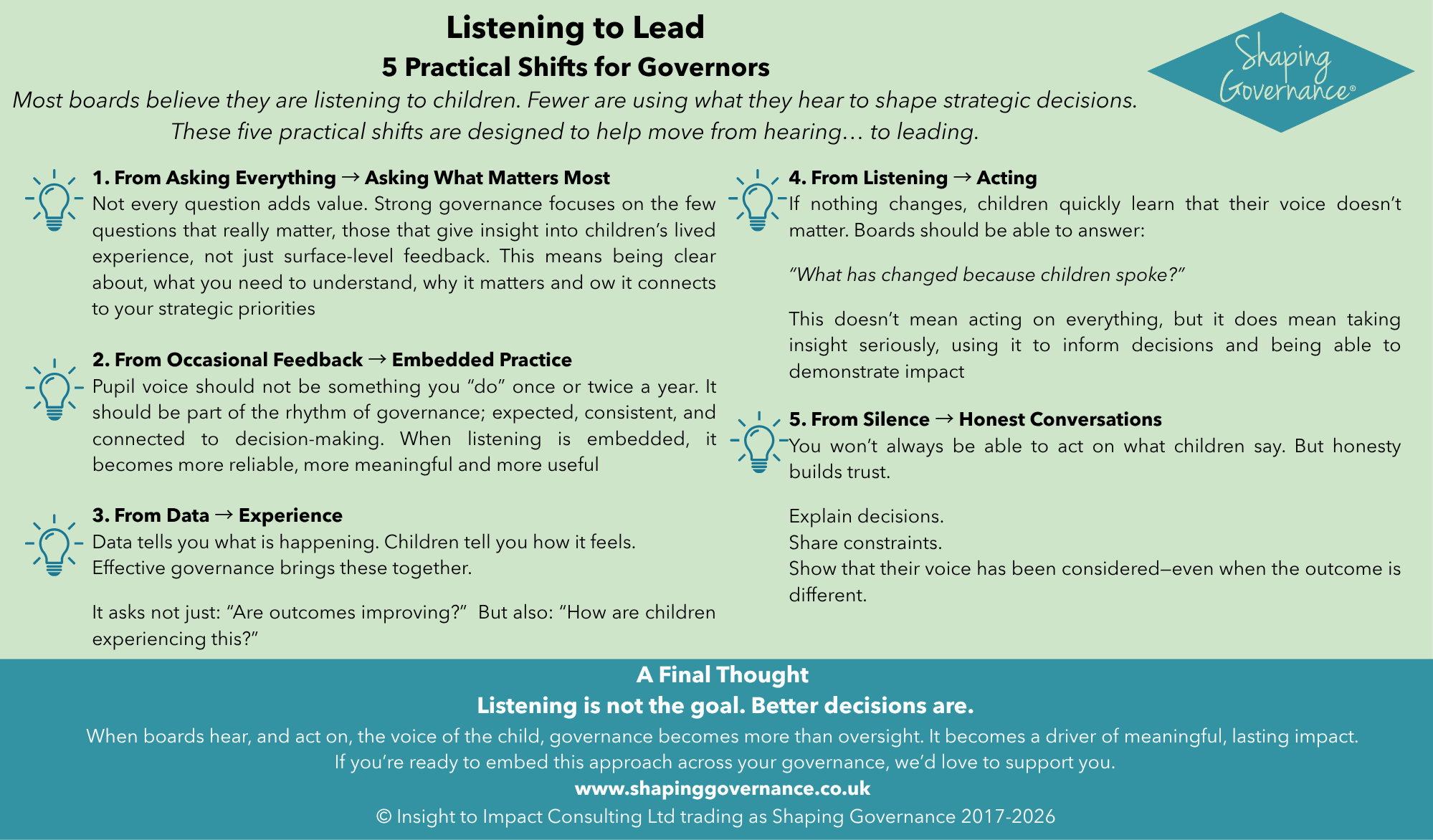
If this resonates, you can start by exploring our 5 Practical Shifts for Governors.
About the author
Su is CEO of Shaping Governance and has over 20 years’ experience supporting governing boards and trustees nationally. Her work is grounded in what she sees through governance reviews; helping boards strengthen assurance, culture, and child-centred decision-making through reflective, appreciative governance.