Voices That Matter? Reflections on Listening, Accountability, and Governance Culture
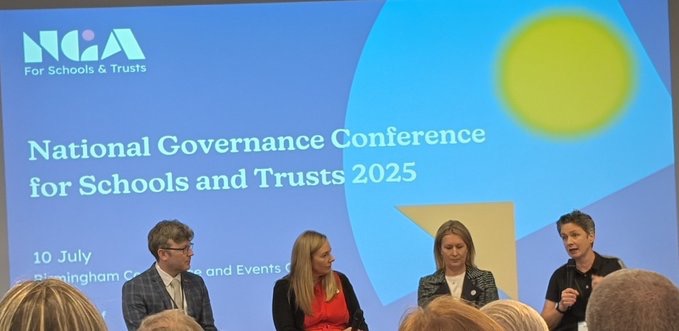
At the NGA’s National Conference yesterday, a guest panel raised a series of questions that cut to the heart of governance:
- How do we actively listen to our communities and stakeholders?
- Do governors know their communities?
- Where is strategy created?
- How do governors create space for relational building?
- What does accountability look like through the community’s eyes?
These are important and urgent questions. They may have been raised yesterday, but they’ve been simmering in governance for years.
For me, they’re deeply familiar. They’ve been part of my learning, reflection, and practice for two decades, working with school and trust boards, local committees, and corporate parenting partners, always asking: What does meaningful governance look like when people come first?
The answer lies not in soundbites but in the slow, committed work of listening, building trust, and letting community voice shape the culture of governance itself.
Do governors really know their communities; or just about them?
Governors are often asked to ‘know the context’. But context isn’t just data. It’s people. It’s lived experience. And how people experience the decisions being made about their children’s education. It’s easy to assume that presence equals connection; that having parent governors, for example, means you’re tuned in to the community. But representation and relationship aren’t the same thing.
Back in 2017, when I created Shaping Governance, one of the questions that I embedded in these improvement sessions was:
Do you know how your pupils and parents feel about the school or the decisions you make?
88% of boards say they don’t. This still stops me in my tracks. Because it’s not a minor gap; it’s a governance blind spot.
Listening isn’t an agenda item. It’s a culture.
The panel yesterday asked how governors can actively listen; the word “actively” matters.
Too often, listening in governance is polite and procedural. A survey here. A student council presentation there. It’s well-intentioned; but disconnected from decision-making.
Real listening, the kind that builds trust and shapes strategy, means:
- Creating space, not just slots.
- Asking open, appreciative questions.
- Showing clearly how voice has changed (or confirmed) direction.
Listening that doesn’t change anything isn’t really listening. It’s performance.
Where is the strategy created; and who gets to shape it?
Another powerful question from the panel: Where is strategy created?
In my experience, it’s not just built in documents. It’s grown in relationships. In what’s valued. In who is invited into the conversation.
This is why relational governance matters, not as a soft skill but as a strategic foundation. If relationships are poor between boards and school leaders, between trustees and local stakeholders, and between governors and communities, then strategy will always feel distant, imposed, or abstract.
The best governance I’ve seen puts time and care into relationships. Because without that, strategy becomes detached from the very people it’s meant to serve.
What does accountability look like through the community’s eyes?
The conference sought to consider “Accountability through the community’s eyes,” a powerful phrase. But it’s also a challenge.
In many cases, governance still works through compliance and oversight; processes that prioritise metrics over meaning. Yet if we’re serious about being accountable to communities, we have to be prepared to look through their eyes. Not just at performance data but at lived experience.
That means asking:
- What does this community value?
- What does good look like here?
- Where might we be missing what matters?
I’m a great advocate for Appreciative Governance. This approach doesn’t ignore problems; it surfaces what matters, what works, and what needs to change. It asks better questions and stays curious for longer.
Final thought: These questions aren’t new; but they’re not going away
Hearing these questions raised so clearly at yesterday’s NGA conference gave me hope.
Not because the answers are easy; they aren’t.
But because more people are now ready to sit with the complexity.
I’ve spent years working alongside boards and leaders to explore these very challenges: building governance structures that value voice, embed listening, and lead with care. Not perfect answers; but real, grounded practice.
And perhaps that’s what we need more of.
- Governance that treats listening not as an extra task but as a guiding principle.
- Governance that builds trust as intentionally as it builds strategy.
- Governance that understands children, families, and communities are not the audience; they’re the co-authors.
The guest panel gave voice to what many have long felt. But naming the challenge is only the beginning.
The work now is to stay with these questions, to resist the pull of neat solutions, and instead do the slower, more meaningful work of reflection, learning, and redesign.
For me, that’s what appreciative, child-centred governance offers:
- A way of thinking that looks for insight, not just oversight.
- A way of working that builds from community strengths.
- A way of leading that puts relationships at the centre, not as an afterthought, but as the foundation.
If we can do that consistently and with care, then “Voices that Matter” won’t just be a conference theme. They’ll be the foundation we build on.